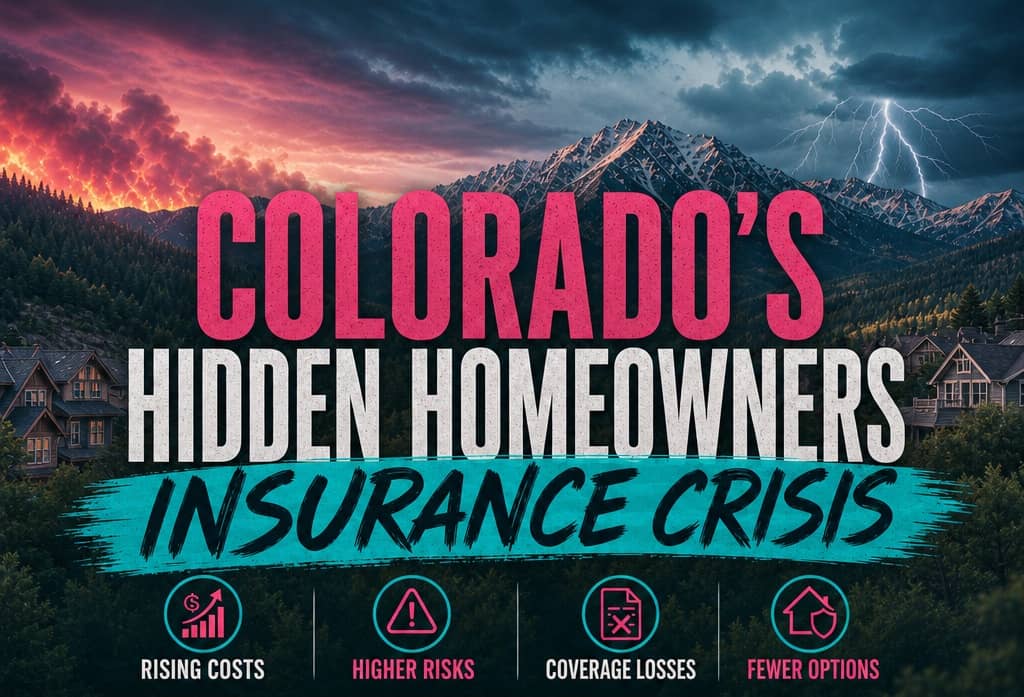
Colorado’s Hidden Homeowners Insurance Crisis
Colorado homeowners already know insurance premiums have been climbing, but what’s happening now is different. Costs aren’t just rising, they’re reshaping the entire home‑buying experience. For many buyers, the biggest surprise isn’t interest rates or home prices. It’s insurance. And in today’s market, securing a policy has become one of the most stressful and expensive parts of the transaction.
Most people have heard about the wildfire problem. Fewer understand the roof problem. But both are hitting Colorado families at the same time, and together they’re creating a perfect storm of affordability challenges that buyers never see coming until they’re already under contract.
3 Key Takeaways
- Wildfire coverage shrinking: Insurers are pulling out of high‑risk areas, making it harder for buyers to secure fire insurance and close on homes.
- Roof insurance pitfalls: Hail damage has led to policies with roof depreciation and percentage‑based deductibles, leaving homeowners with massive out‑of‑pocket costs.
- Buyer and seller impact: These insurance shifts affect affordability, resale value, and deal stability, making early insurance quotes and roof certifications essential in Colorado real estate.
Wildfire Risk: The Coverage That’s Getting Harder to Find
Colorado’s wildfire seasons have grown longer, hotter, and more destructive. Insurers know it, and they’re adjusting their risk models faster than the housing market can keep up. In high‑risk zones (especially along the Front Range, foothills, and forest‑adjacent communities) some carriers are pulling out entirely. Others are tightening underwriting standards or raising premiums so sharply that buyers are shocked when they get their first quote.
For buyers, this means one thing: even if you can afford the house, you may not be able to insure it. And without insurance, you can’t close.
This is where deals fall apart. Buyers scramble for last‑minute quotes. Sellers are blindsided. Lenders step in with stricter requirements. And everyone loses time, money, and leverage.
But wildfire coverage is only half the story.
The Roof Insurance Trap: The Problem Almost No One Talks About
Colorado is the hail capital of the United States. That’s not an exaggeration—it’s a statistical reality. Insurers pay out more in hail‑related roof claims here than almost anywhere else in the country. And because of that, they’ve quietly rewritten the rules.
To keep premiums “low,” many carriers now offer policies that look affordable on paper but shift enormous financial risk onto the homeowner. Two of the most common tactics are roof depreciation and percentage‑based deductibles.
1. Roof Depreciation: The Policy That Pays Less Every Year
Under a depreciated roof policy, the older your roof gets, the less your insurance company will pay to replace it. A 10‑year‑old roof may only be covered at 40–60% of its replacement cost. That means a homeowner could be on the hook for thousands (even tens of thousands) after a major storm.
Most buyers don’t realize they’ve accepted a depreciated roof policy until after the first hailstorm hits. By then, it’s too late.
2. Percentage‑Based Deductibles: The Expensive Surprise Hidden in the Fine Print
This is the one that catches people off guard.
Instead of a flat deductible, say $1,500, many Colorado policies now use a 1% or even 2% deductible based on the home’s value. On a $700,000 home, a 1% deductible means the homeowner pays $7,000 out of pocket before insurance covers a single dollar of damage. At 2%, that number jumps to $14,000.
For many families, that’s financially devastating.
And because these deductibles apply specifically to wind and hail claims, they hit Colorado homeowners harder than almost anywhere else in the country.
Why This Matters for Buyers Right Now
When insurance companies shift risk onto homeowners, it doesn’t just affect monthly budgets, it affects long‑term affordability, resale value, and the ability to recover after a storm. Buyers who don’t understand these policy changes may think they’re getting a good deal, only to discover later that their “affordable” insurance comes with massive hidden costs.
This is why insurance can no longer be an afterthought in Colorado real estate. It has to be part of the conversation from the very beginning.
What Buyers Should Do Before Making an Offer
Buyers should request insurance quotes early—ideally before going under contract. They should ask specifically about roof coverage, depreciation schedules, and deductible structures. And they should compare multiple carriers, because the difference between policies can be dramatic.
Working with a real estate team that understands these issues isn’t optional anymore. It’s essential. Colorado’s insurance landscape is changing fast, and buyers need someone who can help them navigate it.
What This Means for Sellers
Sellers should know that insurance challenges can affect their pool of buyers. A home with an aging roof or a location flagged as high‑risk may require proactive steps—like roof certifications, mitigation improvements, or even pre‑listing insurance consultations—to keep deals from falling apart.
The Bottom Line
Colorado’s homeowners insurance crisis isn’t just about rising premiums. It’s about shrinking coverage, shifting risk, and policies that look affordable until the moment you need them. Wildfire exposure and hail damage are driving insurers to protect themselves, often at the expense of homeowners who don’t realize what they’ve signed up for.
For buyers, the key is awareness. For sellers, it’s preparation. And for everyone in the market, it’s understanding that insurance has become one of the most important (and most overlooked) parts of buying a home in Colorado.